
Auto Policy Quotes: Why Mileage Matters in the UK and Canada sets the stage for this enthralling narrative, offering readers a glimpse into a story that is rich in detail and brimming with originality.
The topic delves into the importance of mileage in determining auto insurance policy quotes, exploring differences between the UK and Canada, technology's role in tracking mileage, and customer behavior in reporting accurate mileage.
Importance of Mileage in Auto Policy Quotes
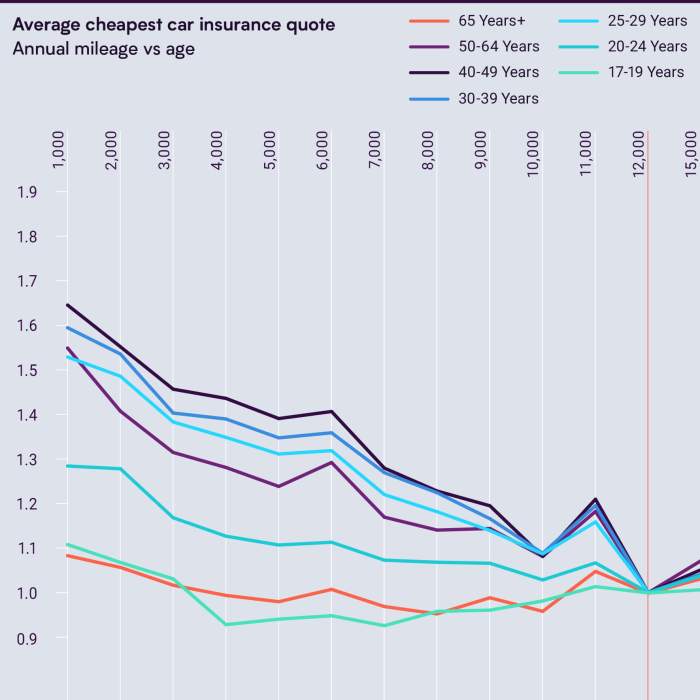
When it comes to auto insurance policy quotes in the UK and Canada, mileage plays a crucial role in determining the cost of premiums. Insurers use mileage data as a key factor in calculating policy quotes accurately, as it directly correlates to the level of risk associated with the driver.
Impact of High and Low Mileage
- High Mileage: Drivers who cover a high number of miles annually are typically considered to be at a higher risk of being involved in accidents. As a result, insurance premiums for high mileage drivers are often higher to account for this increased risk.
- Low Mileage: Conversely, drivers who cover a low number of miles annually are viewed as lower risk drivers. Insurance companies may offer discounts or lower premiums to low mileage drivers, as they are less likely to be involved in accidents due to less time spent on the road.
Calculation of Policy Quotes
Insurers collect mileage data from various sources such as odometer readings, telematics devices, or self-reported estimates. This data is then used to accurately assess the level of risk posed by the driver and determine the appropriate premium to charge. By analyzing mileage patterns, insurers can tailor policy quotes to reflect the individual driving habits of each policyholder.
Differences in Mileage Consideration between the UK and Canada
When it comes to auto policy quotes, the consideration of mileage varies between the UK and Canada. Understanding these differences can help drivers make informed decisions about their insurance coverage.
Mileage Assessment Regulations
In the UK, insurance providers typically use annual mileage as a key factor in determining auto policy quotes. Drivers are required to provide accurate estimates of the number of miles they expect to drive in a year. This information helps insurers assess the level of risk associated with each policyholder.
On the other hand, in Canada, while mileage is still considered, there may be more emphasis on other factors such as driving record and location.
Average Annual Mileage Impact
In the UK, the average annual mileage tends to be lower compared to Canada due to the country's smaller size and more extensive public transportation options. As a result, drivers in the UK may benefit from lower policy quotes based on their reduced mileage.
In contrast, Canadians often have higher average annual mileage due to longer distances between destinations and limited public transportation options in some regions. This higher mileage can lead to increased insurance premiums in Canada compared to the UK.
Technology and Mileage Tracking
Technology plays a crucial role in tracking mileage for insurance purposes, with the use of innovative tools like telematics devices.
Telematics Devices for Mileage Tracking
Telematics devices are increasingly utilized by insurance companies to track the mileage of vehicles. These devices are installed in cars and gather data on driving habits, including distance traveled, speed, and time on the road.
- Telematics devices provide accurate and real-time mileage information, allowing insurance companies to tailor auto policy quotes based on actual usage.
- By analyzing the data collected from telematics devices, insurers can offer personalized pricing to drivers, rewarding those who drive fewer miles with lower premiums.
- Some insurance companies also offer discounts or rewards for safe driving behavior, incentivizing policyholders to maintain good driving habits.
Benefits and Drawbacks of Technology for Mileage Tracking
The use of technology for mileage tracking in auto policies comes with its own set of advantages and potential drawbacks.
- Benefits:
- Accurate mileage data ensures fair pricing for policyholders, as premiums are based on actual usage.
- Telematics devices promote safe driving habits by providing feedback on driving behavior, leading to reduced accidents and claims.
- Insurance companies can better manage risks and prevent fraud through the use of technology-driven mileage tracking.
- Drawbacks:
- Privacy concerns may arise as telematics devices collect detailed information about a driver's behavior and location.
- Technical issues or malfunctions in the devices could lead to inaccurate mileage data, affecting insurance premiums.
- Some drivers may feel uncomfortable with constant monitoring of their driving habits, impacting their willingness to use telematics devices.
Innovative Mileage Tracking Methods and Auto Insurance Quotes
Innovative mileage tracking methods have revolutionized the way auto insurance quotes are calculated, leading to more personalized and cost-effective policies.
- Usage-based insurance (UBI) programs have gained popularity, where drivers pay premiums based on their actual mileage and driving behavior.
- Mobile apps that track mileage using smartphone sensors have made it easier for policyholders to monitor their usage and potentially lower their insurance costs.
- Data analytics and artificial intelligence are being used to analyze mileage data and predict risk factors, allowing insurers to offer competitive rates to customers.
Customer Behavior and Mileage Reporting
When it comes to auto policy quotes, accurate mileage reporting by customers plays a crucial role in determining insurance premiums. Customers are typically required to provide their estimated annual mileage as part of the policy application process. However, there can be discrepancies between the reported mileage and the actual miles driven, which can impact the cost of insurance coverage.
Common Discrepancies Between Reported and Actual Mileage
- One common discrepancy is underreporting mileage, where customers may provide lower estimates to try and reduce their premiums. This can lead to inaccuracies in the policy quote and potential issues with coverage in the event of a claim.
- On the other hand, some customers may overestimate their mileage, thinking it will provide them with a buffer in case they end up driving more than expected. However, this can result in higher premiums than necessary.
- Factors such as changes in driving habits, work commute distances, or unexpected trips can also contribute to discrepancies between reported and actual mileage.
Tips for Accurate Mileage Reporting
- Keep track of your mileage regularly to ensure you have an accurate estimate of your annual driving habits. Utilizing mileage tracking apps or devices can help simplify this process.
- Be honest and provide realistic estimates when reporting your mileage to insurance providers. Inaccurate information can lead to complications and potential issues with your policy down the line.
- Update your insurance provider if there are significant changes in your driving habits that could impact your mileage. This will help ensure that your policy remains aligned with your actual driving needs.
Final Thoughts
In conclusion, understanding the significance of mileage in auto policy quotes sheds light on the intricate world of insurance pricing, providing insights into how various factors can influence premiums. This discussion highlights the impact of technology advancements and customer honesty in ensuring fair and accurate policy quotes.
FAQ Compilation
How does mileage affect auto insurance policy quotes?
Insurers use mileage data to calculate policy quotes accurately, with high mileage often leading to higher premiums and vice versa for low mileage.
What are the key differences in how mileage is considered in auto policy quotes between the UK and Canada?
There are variations in how each country factors in mileage, including unique regulations and standards, as well as differences in average annual mileage and its impact on policy quotes.
How is technology used for mileage tracking in insurance purposes?
Technology like telematics devices is utilized to track mileage accurately, offering benefits like personalized pricing but also potential drawbacks in privacy concerns.
How does self-reported mileage by customers influence policy quotes?
Accurate self-reported mileage is crucial as discrepancies can impact insurance premiums, so customers should ensure truthful reporting to receive fair policy quotes.